My Planet View · Country guide
Spain
Late dinners, long light evenings and a fiesta somewhere almost every week.
- Best months
- Apr–Jun, Sep–Oct
- Last checked
- 16 November 2026

Overview
Spain packs a lot into one country: the Moorish palaces of Andalusia, Gaudí's buildings in Barcelona, the art museums of Madrid, the green hills and seafood of the north, and beaches on the Mediterranean, the Atlantic and two groups of islands, the Balearics and the Canaries.
Daily life runs late. Lunch is the main meal and dinner rarely starts before nine, so plan sightseeing for the morning and keep the evening for a walk and tapas. Fast trains link the big cities, and regional identity is strong: Catalonia, the Basque Country and Galicia have languages of their own.

When to go
- January: Good
- February: Good
- March: Good
- April: Best
- May: Best
- June: Best
- July: Good
- August: Good
- September: Best
- October: Best
- November: Good
- December: Good
- Best
- The most pleasant weather for sightseeing and being outdoors.
- Good
- Fine for a visit, with a catch (heat, rain, cold or crowds) named below.
- Avoid
- Most visitors would find it hard going: extreme heat, storms or much of it closed.
Season by season
Spring (March to May)
Warm days and green countryside. Holy Week brings processions and fills the hotels, so book early if your dates fall then.
Summer (June to August)
Hot and dry, above all inland: Seville and Córdoba often pass 40°C in July and August. The coasts are busy and at their most expensive in August, when many Spaniards take their holidays.
Autumn (September to November)
September and October keep summer's warmth without its crowds, and the sea is still warm. November turns wetter, especially in the north.
Winter (December to February)
Mild and often sunny on the south coast and in the Canaries; cold nights in Madrid and the interior, and snow for skiing in the Pyrenees and the Sierra Nevada. A good time for city breaks.
The weather
Hot, dry summers and mild winters on the Mediterranean coast and in the south. The central plateau around Madrid has very hot summers and cold winters, while the green north (Galicia, Asturias, Cantabria and the Basque Country) is mild and rainy all year. The Canary Islands are warm all year round.
Festivals and holidays
Semana Santa (Holy Week)
The week before Easter, in March or April · Across Spain, above all Seville and Málaga
Religious brotherhoods carry statues through the streets by day and night. Moving and very crowded: book rooms well ahead.
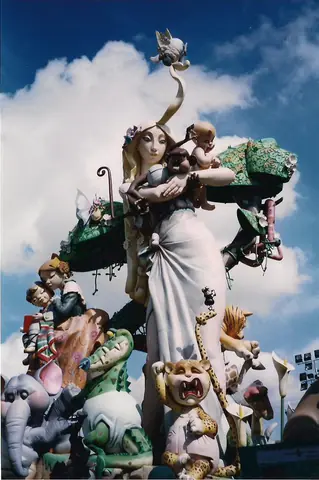
Photo: Francesc Fort, CC BY-SA 4.0 Las Fallas
15–19 March · Valencia
Huge papier-mâché figures fill the streets, with fireworks and firecrackers every day, and are burnt on the last night.
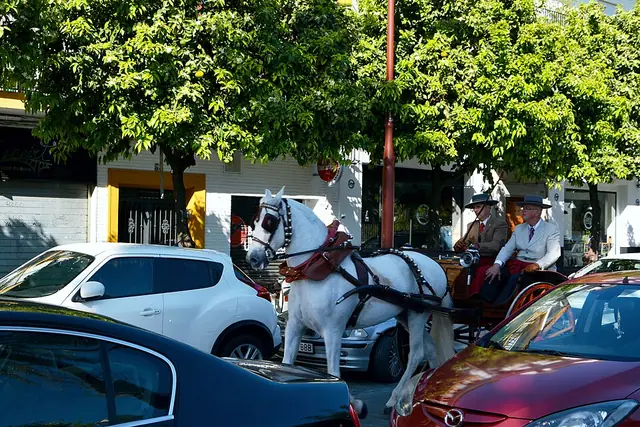
Photo: Tajchman, CC BY-SA 4.0 Feria de Abril
Two weeks after Easter, usually in April, sometimes early May · Seville
A week of flamenco dresses, horses and dancing in rows of striped marquees (casetas), many of them private.
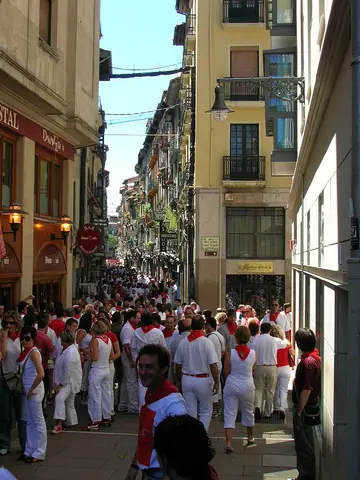
Photo: SanchoPanzaXXI, CC BY-SA 3.0 San Fermín
6–14 July · Pamplona
Nine days of street parties, best known for the morning bull runs (encierros). The town is packed and rooms cost far more.
La Tomatina
The last Wednesday of August · Buñol, near Valencia
An hour-long tomato fight in the town's streets. Entry is by ticket, and numbers are capped.
Los Reyes (Three Kings)
5–6 January · Across Spain
Parades on the evening of 5 January throw sweets to the children. 6 January, when presents are given, is a public holiday and many shops close.


How regions differ
Andalusia and the interior
The south and the central plateau are at their best in spring and autumn. Summer heat there is fierce, so keep the afternoons for indoor sights or a long lunch.
The green north
Galicia, Asturias, Cantabria and the Basque Country are mild and rainy, and their summers are rarely too hot, so June to September suits them best.
The Balearic Islands
Mallorca, Menorca and Ibiza have their season from May to October. Many hotels and restaurants close in winter, especially on Menorca and Ibiza.
The Canary Islands
Off the coast of Africa and an hour behind the mainland, the islands are spring-like all year and busiest in winter.
Culture and customs
Greetings
Friends, and people being introduced socially, greet each other with two kisses, one on each cheek; men who know each other often shake hands or hug instead. A handshake is right for business and with officials. Say "buenos días" when you walk into a small shop.
Tipping
Not expected the way it is in the US, and service is included in prices. Locals leave small change or round up at a bar; in a restaurant, 5 to 10% is generous for good service.
What to wear
Casual is fine almost everywhere, though people dress neatly in the cities. Cover your shoulders and knees in cathedrals and churches. Keep swimwear for the beach: some towns, Barcelona among them, fine people walking the streets in it.
Etiquette
- Meals are late: lunch from about 2 pm, dinner from 9 pm or later. Many restaurant kitchens close between the two.
- Outside the big cities, many shops close in the afternoon, roughly 2 to 5 pm, and most are closed on Sundays.
- The bill won't come until you ask for it (la cuenta, por favor).
- Catalonia, the Basque Country and Galicia have their own languages and a strong sense of identity. Signs may be in the local language first, and a word or two of it is welcome.
- In some cities, Granada among them, a small tapa comes free with each drink.
What to eat
- Tapas
- Small plates shared over a drink, at the bar or at a table. In the Basque Country they're pintxos, often on a slice of bread held with a cocktail stick.
- Paella
- From Valencia, where it's a lunchtime dish of rice with chicken and rabbit, or with seafood. It's cooked to order, so expect to wait.
- Jamón ibérico
- Cured ham from black Iberian pigs, sliced thin by hand. The finest, de bellota, comes from pigs fed on acorns.
- Tortilla española
- A thick potato omelette, often with onion, served in slices at any time of day.
- Gazpacho and salmorejo
- Cold tomato soups from Andalusia, for hot days. Salmorejo is thicker, and topped with egg and ham.
- Churros con chocolate
- Fried dough sticks dipped in thick hot chocolate, for breakfast or after a late night.
A few words of Spanish
| Phrase | Say it | Meaning |
|---|---|---|
| Hola | OH-lah | Hello |
| Buenos días | BWEH-nohs DEE-ahs | Good morning |
| Por favor | por fah-BOR | Please |
| Gracias | GRAH-thee-ahs | Thank you |
| Perdón | pehr-DOHN | Sorry; excuse me |
| ¿Habla inglés? | AH-blah een-GLAYS | Do you speak English? |
| ¿Cuánto cuesta? | KWAN-toh KWES-tah | How much is it? |
| La cuenta, por favor | lah KWEN-tah por fah-BOR | The bill, please |
Landmarks in Spain
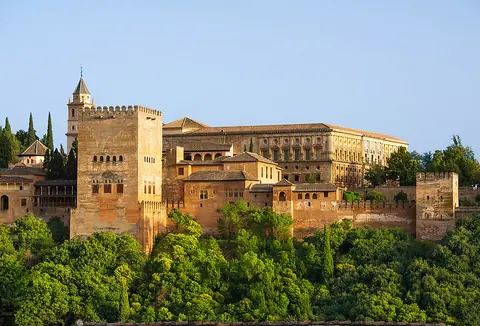
Photo: Jebulon, CC0 building
Alhambra
Add a photo taken within 800 m of it, with its location saved, and your map suggests this landmark for it.
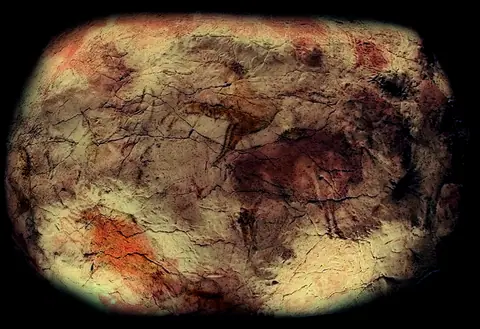
Photo: José-Manuel Benito, Public domain natural
Cave of Altamira
Add a photo taken within 1 km of it, with its location saved, and your map suggests this landmark for it.
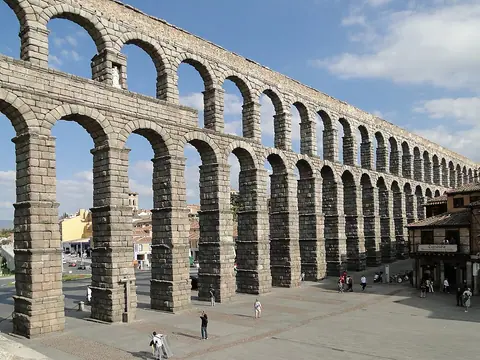
Photo: Bernard Gagnon, CC BY-SA 3.0 park
Segovia Old Town and Aqueduct
Add a photo taken within 5 km of it, with its location saved, and your map suggests this landmark for it.
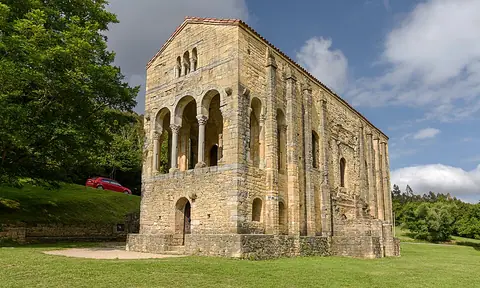
Photo: Jorge Franganillo, CC BY 2.0 site
Monuments of Oviedo
Add a photo taken within 3 km of it, with its location saved, and your map suggests this landmark for it.
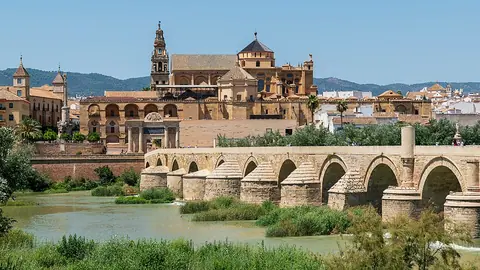
Photo: Jose María Ligero Loarte, CC BY-SA 4.0 old town
Historic Centre of Córdoba
Add a photo taken within 1.5 km of it, with its location saved, and your map suggests this landmark for it.
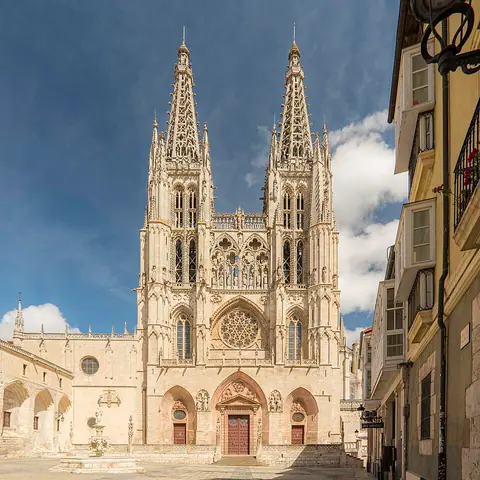
Photo: Fernando, CC BY-SA 4.0 building
Burgos Cathedral
Add a photo taken within 300 m of it, with its location saved, and your map suggests this landmark for it.
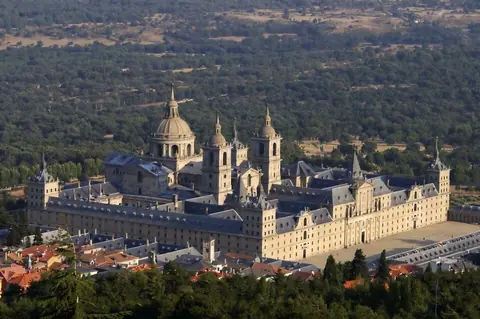
Photo: Turismo Madrid Consorcio Turístico from Madrid, España, CC BY 2.0 site
El Escorial
Add a photo taken within 1.5 km of it, with its location saved, and your map suggests this landmark for it.
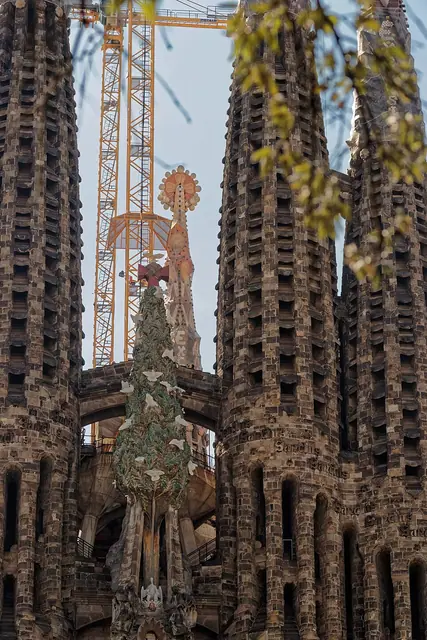
Photo: Txllxt TxllxT, CC BY-SA 4.0 site
Works of Gaudí (Sagrada Família)
Add a photo taken within 3 km of it, with its location saved, and your map suggests this landmark for it.
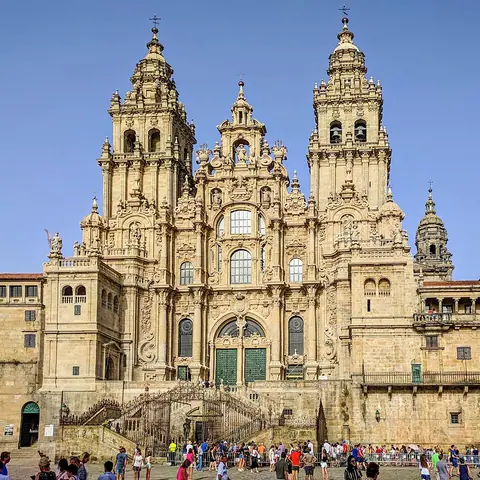
Photo: stephenD, CC BY-SA 4.0 old town
Old Town of Santiago de Compostela
Add a photo taken within 1.5 km of it, with its location saved, and your map suggests this landmark for it.


Practical facts
- Currency
- Euro (€)
- Languages
- Spanish (Castilian). Catalan, Galician and Basque are also official in their regions, and Occitan (Aranese) in Catalonia.
- Plugs and voltage
- Types C and F (two round pins), 230 V
- Driving
- On the right
- Time
- Central European Time: UTC+1, and UTC+2 from late March to late October. The Canary Islands are an hour behind.
- Emergency number
- 112 for police, fire and ambulance
- Calling code
- +34
From Spain on Wikidata (free to reuse, CC0), queried on 16 November 2026. Rules and numbers change: check before you travel.
Plan your trip
Places to stay, tours, flights and travel insurance for Spain, from our travel partners: open the Travel Desk when you’re ready to book.
Partner offers. We may earn a commission if you book, at no cost to you.
Start your map
Colour in Spain and every other country you've been to, add your photos and plan the next trip. Your map is private and free to start.