My Planet View · Country guide
Portugal
Lisbon and Porto, Douro vineyards, Algarve beaches and islands in the Atlantic.
- Best months
- May–Jun, Sep–Oct
- Last checked
- 16 November 2026

Overview
Portugal is only about 560 km from north to south, with a long Atlantic coastline: Lisbon and its old quarters above the Tagus, Porto and its port lodges on the Douro, the terraced vineyards of the Douro Valley, the cork-oak plains and whitewashed towns of the Alentejo, and the cliffs and beaches of the Algarve. Far out in the Atlantic, the islands of Madeira and the Azores are part of the country too.
Fast Alfa Pendular trains link Braga, Porto, Coimbra, Lisbon and the Algarve, and buses reach most other places; for the Alentejo and the Douro Valley a car helps. Lisbon and Porto are both built on steep hills, so plan for climbs and bring comfortable shoes.

When to go
Mainland Portugal. Madeira and the Azores have climates of their own, described below.
- January: Good
- February: Good
- March: Good
- April: Good
- May: Best
- June: Best
- July: Good
- August: Good
- September: Best
- October: Best
- November: Good
- December: Good
- Best
- The most pleasant weather for sightseeing and being outdoors.
- Good
- Fine for a visit, with a catch (heat, rain, cold or crowds) named below.
- Avoid
- Most visitors would find it hard going: extreme heat, storms or much of it closed.
Season by season
Spring (March to May)
Green and mild, warming from the high teens °C in March to the mid-20s in May. Showers are likely until April, especially in the north. Easter week and 25 April (Freedom Day, a public holiday) are busy.
Summer (June to August)
Warm on the coast, where the Atlantic keeps Lisbon at about 28°C by day, but very hot inland, where heatwaves can pass 40°C and forest fires are a risk. June is the month of the city saints' festivals; the Algarve is at its busiest in August.
Autumn (September to November)
September and October stay warm and mostly dry, with the sea at its warmest and the grape harvest in the Douro Valley. The rain usually returns in late October or November.
Winter (December to February)
Mild and wet rather than cold: around 15°C by day in Lisbon and the Algarve, cooler and rainier in Porto, with snow only on the Serra da Estrela. Many homes and cheaper guesthouses have little heating, so nights indoors can feel cold.
The weather
Mild and Atlantic: warm, dry summers and cool, wet winters. The north is the greenest and wettest part, the Alentejo inland the hottest in summer, and the Algarve the sunniest and driest. Winds off the ocean keep the west coast fresh and its sea cool, even in August.
Festivals and holidays
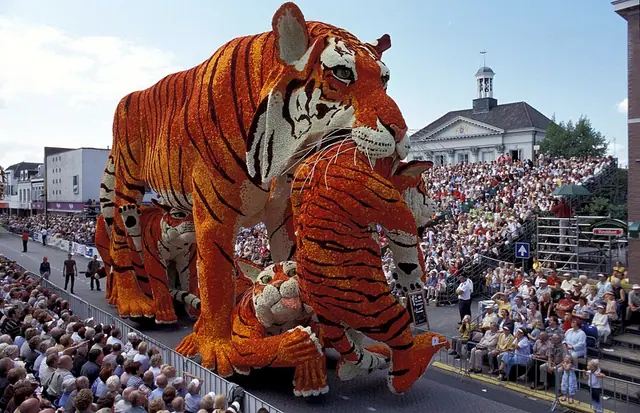
Photo: Foto van Hassel BV, CC BY-SA 3.0 Festa da Flor (Flower Festival)
Usually in April or May, a few weeks after Easter · Funchal, Madeira
A parade of floats and dancers covered in flowers through the town, and a "wall of hope" built by schoolchildren, each adding a flower.
Fátima pilgrimages
12–13 May and 12–13 October · Fátima, central Portugal
Huge crowds of pilgrims, many arriving on foot, fill the shrine for candlelit processions on the anniversaries of the 1917 apparitions.
Santo António
12–13 June · Lisbon
Lisbon's city festival: grilled sardines, paper garlands and street parties in Alfama and the other old quarters, and a parade of the districts' marching groups (marchas populares) down Avenida da Liberdade on the evening of 12 June. Smaller street parties go on all month.
São João
The night of 23–24 June · Porto
Porto's biggest night: crowds tap each other on the head with plastic hammers, eat grilled sardines and watch fireworks over the Douro at midnight.
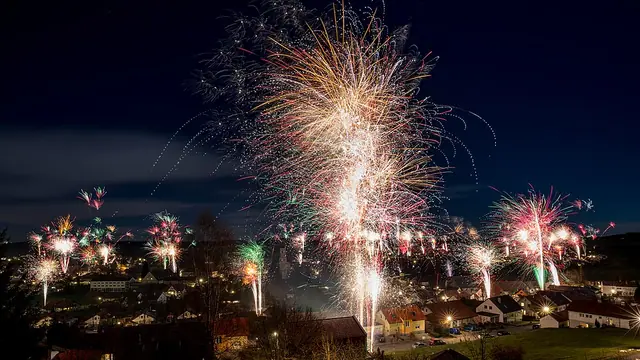
Photo: Andreas Weith, CC BY-SA 4.0 New Year's Eve
31 December · Funchal, Madeira
Fireworks launched all round Funchal's bay, a display that once set a world record for its size, watched from the town's hillsides and from cruise ships in the harbour.


How regions differ
Porto and the north
Greener and wetter than the south, with most rain from October to April. The Douro Valley's terraced vineyards are at their best from May to October, and the grape harvest is usually in September and early October.
Lisbon and the Alentejo
Lisbon has mild winters and warm summers cooled by the sea, while the hills of Sintra nearby are often misty and cooler. The Alentejo inland is the hottest part of the country, often above 35°C in July and August, so spring and autumn suit it best.
The Algarve
The south coast is the sunniest part of Portugal, with sandy beaches, coves and cliffs. Beach weather runs from June to September, busiest in August, though the Atlantic is cooler than the Mediterranean. Mild winters suit golf and coastal walks.
Madeira and the Azores
Madeira, about 1,000 km south-west of Lisbon, is mild all year, with walks along its levadas (old irrigation channels). The Azores, nine volcanic islands in mid-Atlantic, are greener, wetter and more changeable, an hour behind the mainland; June to September is their season for walking and crater lakes, and whale-watching runs from spring to autumn.
Culture and customs
Greetings
A handshake when you meet someone; women, and men greeting women, usually kiss on both cheeks, while men shake hands. Say "bom dia" (good morning) until lunch, "boa tarde" in the afternoon and "boa noite" after dark.
Tipping
Not expected, and service isn't usually added. Locals round up or leave small change in cafés; in restaurants, 5 to 10% is generous for good service. Taxi fares are usually rounded up.
What to wear
Casual and practical, though people dress neatly in the cities. Cover your shoulders and knees in churches and at Fátima. Bring a layer for the evenings even in summer, as ocean breezes cool the coast.
Etiquette
- Don't assume Spanish will do. Portuguese is a different language, and English is often the better choice if you have no Portuguese.
- Bread, olives, cheese and other starters brought to the table at the start of a meal (the couvert) aren't free: you pay for what you eat, and can send back what you don't want.
- Lunch runs from about 12.30 to 3 pm and dinner from about 7.30 or 8 pm. Many restaurants close between the two, and some close one day a week.
- The pavements of Lisbon and Porto are made of polished limestone cobbles (calçada) that turn slippery in the rain: wear shoes with grip.
- Pickpockets work Lisbon's crowded trams, the 28 above all: keep bags closed and in front of you.
What to eat
- Bacalhau
- Dried salt cod, cooked in more ways than there are days in the year. Try bacalhau à Brás: shredded cod with eggs, onion and thin fried potatoes.
- Grilled sardines
- Cooked over charcoal in the street through the summer, above all at the June festivals, and eaten on a slice of bread.
- Pastéis de nata
- Custard tarts in crisp, flaky pastry, best warm with a dusting of cinnamon. The best known come from a bakery in Belém, in Lisbon, which has made them since 1837.
- Francesinha
- Porto's heavyweight sandwich of ham, sausage and steak under melted cheese and a beer and tomato sauce, usually with chips.
- Cataplana and arroz de marisco
- Seafood from the coast: cataplana is a stew cooked in a hinged copper pan of the same name, from the Algarve; arroz de marisco is a wet, rich seafood rice.
- Port and vinho verde
- Port is a fortified wine from the Douro Valley, aged in lodges across the river from Porto in Vila Nova de Gaia. Vinho verde is a young, light wine from the north.
A few words of Portuguese
European Portuguese sounds quite unlike Spanish, with many swallowed vowels and "sh" sounds. English is widely spoken in Lisbon, Porto and the Algarve.
| Phrase | Say it | Meaning |
|---|---|---|
| Olá | oh-LAH | Hello |
| Bom dia | bohn DEE-ah | Good morning |
| Por favor | poor fah-VOR | Please |
| Obrigado / Obrigada | oh-bree-GAH-doo / oh-bree-GAH-dah | Thank you (said by a man / by a woman) |
| Desculpe | dush-KOOLP | Sorry; excuse me |
| Fala inglês? | FAH-lah een-GLAYSH | Do you speak English? |
| Quanto custa? | KWAN-too KOOSH-tah | How much is it? |
| A conta, por favor | ah KON-tah poor fah-VOR | The bill, please |
Landmarks in Portugal
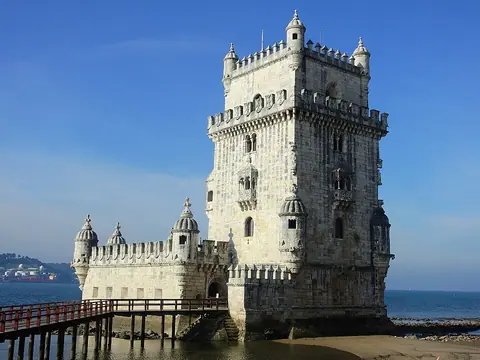
Photo: Rehman Abubakr, CC BY-SA 4.0 building
Tower of Belém
Add a photo taken within 300 m of it, with its location saved, and your map suggests this landmark for it.
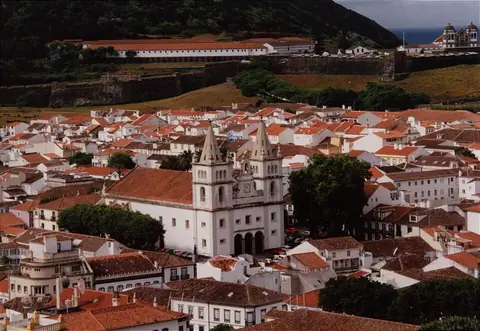
Photo: Unknown author, CC BY-SA 2.0 de old town
Angra do Heroísmo
Add a photo taken within 1.5 km of it, with its location saved, and your map suggests this landmark for it.
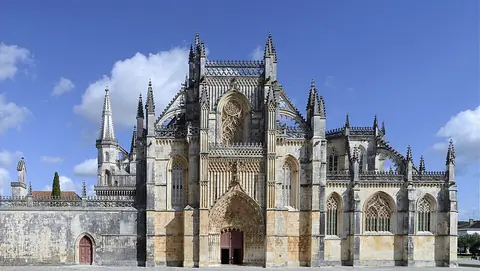
Photo: Alvesgaspar, CC BY-SA 4.0 building
Batalha Monastery
Add a photo taken within 300 m of it, with its location saved, and your map suggests this landmark for it.
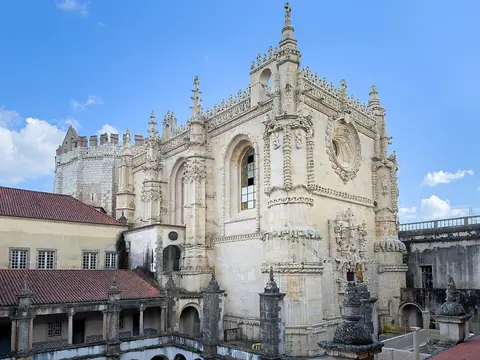
Photo: Kent Wang, CC BY 4.0 building
Convent of Christ, Tomar
Add a photo taken within 500 m of it, with its location saved, and your map suggests this landmark for it.
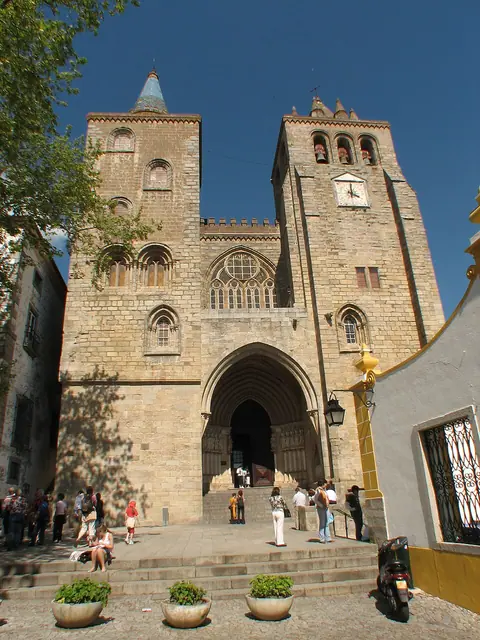
Photo: Unknown author, Public domain old town
Historic Centre of Évora
Add a photo taken within 1.5 km of it, with its location saved, and your map suggests this landmark for it.
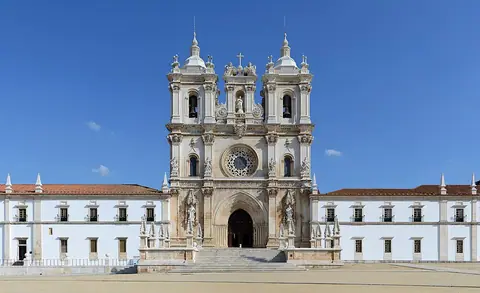
Photo: Alvesgaspar, CC BY-SA 4.0 building
Alcobaça Monastery
Add a photo taken within 300 m of it, with its location saved, and your map suggests this landmark for it.
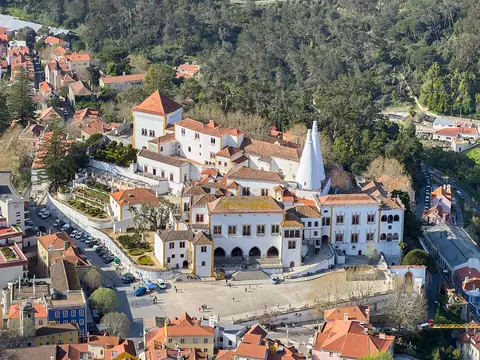
Photo: Kent Wang, CC BY 4.0 site
Sintra
Add a photo taken within 2.5 km of it, with its location saved, and your map suggests this landmark for it.
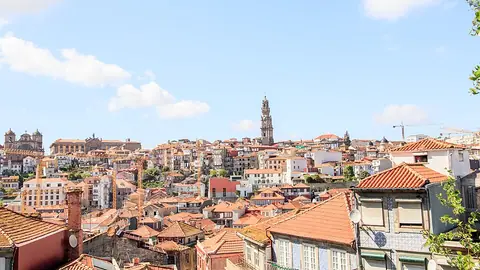
Photo: Rodrigo Tetsuo Argenton, CC BY-SA 4.0 old town
Historic Centre of Porto
Add a photo taken within 1.5 km of it, with its location saved, and your map suggests this landmark for it.
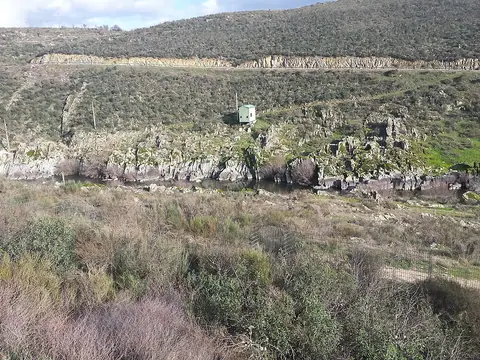
Photo: David Perez, CC BY 4.0 site
Côa Valley and Siega Verde Rock Art
Add a photo taken within 1.5 km of it, with its location saved, and your map suggests this landmark for it.


Practical facts
- Currency
- Euro (€)
- Languages
- Portuguese
- Plugs and voltage
- Types C and F (two round pins), 230 V
- Driving
- On the right
- Time
- Western European Time: UTC+0, and UTC+1 from late March to late October. Madeira keeps the same time; the Azores are an hour behind (UTC−1, and UTC+0 in summer).
- Emergency number
- 112 for police, fire and ambulance
- Calling code
- +351
From Portugal on Wikidata (free to reuse, CC0), queried on 16 November 2026. Rules and numbers change: check before you travel.
Plan your trip
Places to stay, tours, flights and travel insurance for Portugal, from our travel partners: open the Travel Desk when you’re ready to book.
Partner offers. We may earn a commission if you book, at no cost to you.
Start your map
Colour in Portugal and every other country you've been to, add your photos and plan the next trip. Your map is private and free to start.