My Planet View · Country guide
Ireland
Atlantic cliffs, traditional music in the pub and weather that changes by the hour.
- Best months
- May–Sep
- Last checked
- 16 November 2026

Overview
Ireland is a small, green island on the edge of the Atlantic, and most of it is countryside: the cliffs and peninsulas of the west coast, bogs and lakes in the middle, stone forts and ruined monasteries, and towns where traditional music is played in the pub most nights. Dublin has Georgian squares, the Book of Kells at Trinity College and the Guinness Storehouse.
This page covers the Republic of Ireland, which uses the euro. Northern Ireland, in the north-east of the island, is part of the United Kingdom, with pounds sterling and speed limits in miles per hour, though there are no checks at the border. Distances are short but country roads are slow, so allow more time than the map suggests, and pack for rain in every month.

When to go
- January: Good
- February: Good
- March: Good
- April: Good
- May: Best
- June: Best
- July: Best
- August: Best
- September: Best
- October: Good
- November: Good
- December: Good
- Best
- The most pleasant weather for sightseeing and being outdoors.
- Good
- Fine for a visit, with a catch (heat, rain, cold or crowds) named below.
- Avoid
- Most visitors would find it hard going: extreme heat, storms or much of it closed.
Season by season
Spring (March to May)
Longer days, lambs in the fields and fewer visitors. March and April are cool and showery; May is often one of the sunniest months. St Patrick's Day fills Dublin in mid-March.
Summer (June to August)
The warmest months, usually 17–20°C by day, with long evenings: in late June it stays light until about 10 pm. The busiest and most expensive time, above all on the west coast, so book rooms and hire cars early.
Autumn (September to November)
September is often settled and mild, with the summer crowds gone. October and November turn wetter and windier, and Atlantic storms become more likely.
Winter (December to February)
Mild but wet and windy, with less than eight hours of daylight in December. Frost and snow are rare outside the hills. Some seasonal sights, B&Bs and boat trips in the west close until Easter, but Dublin makes a good winter city break, with Christmas lights in December.
The weather
Mild and damp all year, and rarely very hot or very cold: summer days are usually 17–20°C and winter days around 8°C. Rain comes mostly as showers, often with sunshine in between, and can fall in any month. The west gets the most rain and wind; the east and the south-east are drier and sunnier.
Festivals and holidays
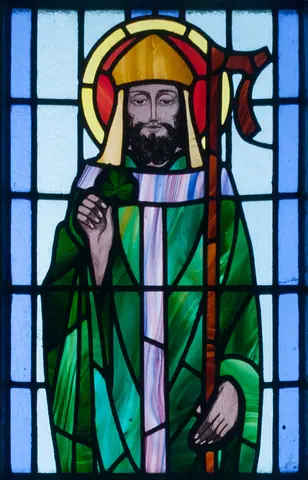
Photo: Andreas F. Borchert, CC BY-SA 4.0 St Patrick's Day
17 March; Dublin's festival runs for several days around it · Across Ireland, above all Dublin
A public holiday for Ireland's patron saint, with a parade in almost every town, the biggest in Dublin, and pubs full from midday. Book Dublin rooms well ahead.
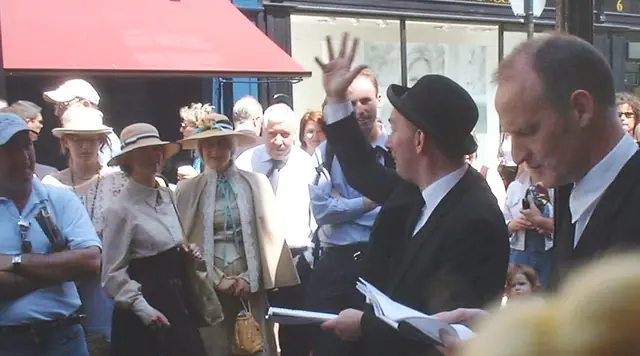
Photo: Flapdragon, Public domain Bloomsday
16 June · Dublin
Readings, walks and Edwardian costume in honour of James Joyce's novel Ulysses, which follows its hero round Dublin on 16 June 1904.
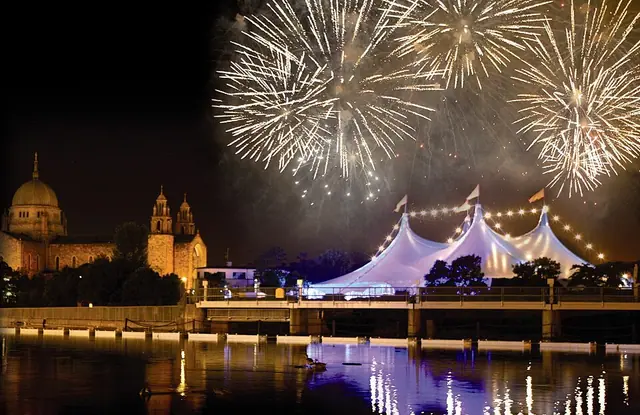
Photo: Galway Daily, CC BY-SA 4.0 Galway International Arts Festival
Usually two weeks in the second half of July · Galway
Theatre, music, art and street shows across the city. The Galway Races, a week of horse racing and parties, usually follow around the end of July.
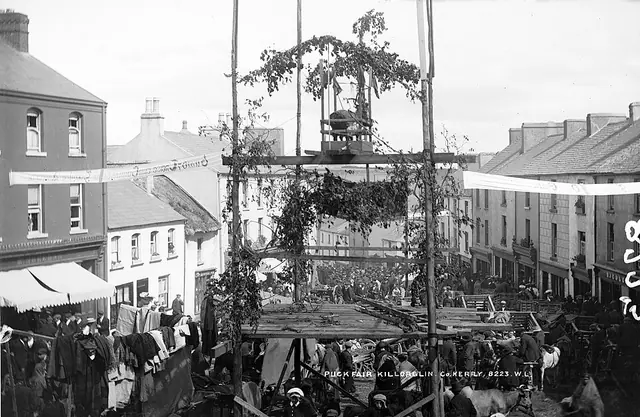
Photo: National Library of Ireland on The Commons, Public domain Puck Fair
10–12 August · Killorglin, County Kerry
One of Ireland's oldest fairs: a wild goat is crowned King Puck and watches over three days of horse trading, market stalls and music.
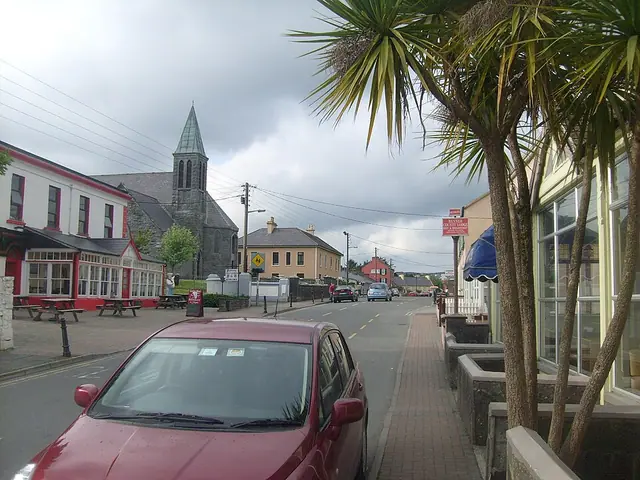
Photo: MaxPride, CC BY-SA 3.0 Lisdoonvarna Matchmaking Festival
Usually all of September, busiest at weekends · Lisdoonvarna, County Clare
A month of dancing, country music and a traditional matchmaker who still pairs people off, in a small spa town near the Burren.
Cork Jazz Festival
The October bank holiday weekend, at the end of October · Cork
Jazz in pubs, hotels and concert halls across the city for a long weekend, from free sessions to ticketed concerts.


How regions differ
Dublin and the east
The capital, with day trips to the Wicklow Mountains, the monastic valley of Glendalough and the passage tomb of Newgrange in the Boyne Valley. The driest part of the country, and fine for a city break in any month.
The west coast
The Wild Atlantic Way: the Kerry peninsulas, the Cliffs of Moher, the Burren, Galway and Connemara. The wettest and windiest region, at its best from May to September, when boats to the islands run most often; landings on Skellig Michael are usually allowed only from mid-May to September, weather permitting.
Cork and the south
Cork city, the harbour town of Kinsale and the coves and fishing villages of West Cork. The south-east, around Wexford and Waterford, is the sunniest corner of the island.
Culture and customs
Greetings
A handshake when you meet someone, and first names straight away. "How are you?" or "How's it going?" is a greeting more than a question, and you'll often hear "What's the craic?": craic (said "crack") means news, fun or good company.
Tipping
Not required, but in restaurants with table service most people leave 10 to 15% unless a service charge is already on the bill, as it often is for larger groups. Nobody tips for drinks at the bar. Taxi fares are usually rounded up.
What to wear
Casual almost everywhere. Bring a waterproof jacket and warm layers in every season, since even summer evenings can be cool, and sturdy shoes for cliff paths, bogs and wet grass. Tidy clothes are enough for churches.
Etiquette
- In a pub with a group, people take turns to buy a round for everyone. Join in, and don't slip away before it's your turn.
- A traditional music session in a pub isn't a show put on for you: keep your voice down during a song, and ask before joining in with an instrument.
- Thanking the bus driver as you get off is normal, in Dublin and everywhere else.
- Country roads are narrow and winding, often between stone walls. Speed limits are in km/h, and road signs are in Irish and English, or in Irish only in the Gaeltacht.
- Northern Ireland is part of the UK. There are no checks at the border, but prices change to pounds sterling and speed limits to miles per hour; if you hire a car, check that you may take it across.
- Smoking is banned inside pubs, restaurants and every other workplace (Ireland was the first country to do so, in 2004), so smokers use outdoor areas.
What to eat
- Full Irish breakfast
- Bacon rashers, sausages, eggs, black and white pudding, grilled tomato and toast or soda bread, with a pot of tea.
- Irish stew
- Lamb or mutton slow-cooked with potatoes, onions and carrots: the classic pub lunch on a cold day.
- Brown soda bread
- A dense wholemeal loaf raised with buttermilk and bread soda instead of yeast, served with butter alongside soup or smoked salmon.
- Seafood
- Creamy seafood chowder, oysters from Galway Bay and smoked salmon, at their best in harbour towns along the west and south coasts.
- Colcannon and boxty
- Potato dishes: colcannon is mashed potato with cabbage or kale and butter; boxty is a pancake of grated and mashed potato, most at home in the north-west.
- Guinness and whiskey
- Stout has been brewed at St James's Gate in Dublin since 1759, and Irish whiskey is distilled across the country, with tours at many distilleries.
A few words of Irish (Gaeilge)
Everyone speaks English, and it's the language of daily life almost everywhere. Irish is on road signs and still spoken day to day in the Gaeltacht, areas mostly along the west coast, and a word or two of it always goes down well.
| Phrase | Say it | Meaning |
|---|---|---|
| Dia duit | DEE-ah gwit | Hello ("God be with you") |
| Le do thoil | leh duh HULL | Please |
| Go raibh maith agat | guh rev mah AH-gut | Thank you |
| Sláinte! | SLAWN-chuh | Cheers! ("Health") |
| Céad míle fáilte | kayd MEE-luh FAWL-chuh | A hundred thousand welcomes (often seen on signs) |
| Slán | slawn | Goodbye |
| Fir / Mná | fir / m-NAW | Men / Women (on toilet doors) |
| An Lár | un LAWR | City centre (on bus signs) |
Landmarks in Ireland
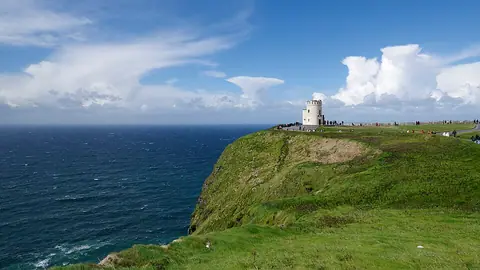
Photo: Berthold Werner, CC BY-SA 4.0 natural
Cliffs of Moher
Add a photo taken within 3 km of it, with its location saved, and your map suggests this landmark for it.
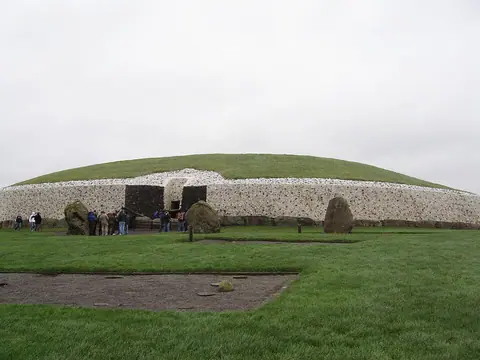
Photo: Barbara y Eugenio, 12482011@N00 (Flickr), CC BY 2.0 site
Brú na Bóinne
Add a photo taken within 1.5 km of it, with its location saved, and your map suggests this landmark for it.
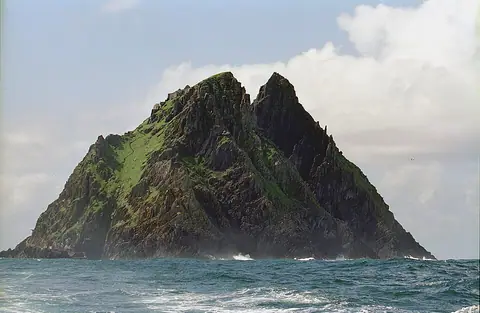
Photo: Jerzy Strzelecki, CC BY-SA 3.0 island
Skellig Michael
Add a photo taken within 3 km of it, with its location saved, and your map suggests this landmark for it.


Practical facts
- Currency
- Euro (€). Northern Ireland, which is part of the UK, uses the pound sterling (£).
- Languages
- Irish and English, both official. English is the everyday language almost everywhere; Irish is spoken mainly in the Gaeltacht, mostly in the west, and is on every road sign.
- Plugs and voltage
- Type G (three rectangular pins, as in the UK), 230 V
- Driving
- On the left
- Time
- Greenwich Mean Time (UTC+0) in winter, and Irish Standard Time (UTC+1) from late March to late October: always the same as the UK.
- Emergency number
- 112 or 999 for police (Gardaí), fire, ambulance and coast guard
- Calling code
- +353
From Ireland on Wikidata (free to reuse, CC0), queried on 16 November 2026. Rules and numbers change: check before you travel.
Plan your trip
Places to stay, tours, flights and travel insurance for Ireland, from our travel partners: open the Travel Desk when you’re ready to book.
Partner offers. We may earn a commission if you book, at no cost to you.
Start your map
Colour in Ireland and every other country you've been to, add your photos and plan the next trip. Your map is private and free to start.