My Planet View · Country guide
France
Paris, Loire châteaux, great wine regions, Alpine ski resorts and the Mediterranean coast.
- Best months
- May–Jun, Sep
- Last checked
- 16 November 2026

Overview
Paris is where most visitors start, but France reaches far beyond it: the châteaux of the Loire Valley, Mont-Saint-Michel and the D-Day beaches in Normandy, the vineyards of Burgundy and Bordeaux, the Alps and the Pyrenees, and a Mediterranean coast running from the Camargue to the Italian border, with the mountainous island of Corsica offshore.
High-speed TGV trains run from Paris to Lyon, Marseille, Bordeaux, Lille and Strasbourg, and fares are cheapest booked weeks ahead. In the countryside a car helps, though most motorways charge tolls. Book the Louvre and the Eiffel Tower online before you go, and expect fewer English speakers once you leave Paris and the main tourist areas.

When to go
Paris and most of mainland France, taken together. Brittany and Normandy, Provence and the Riviera, the Alps and Corsica each have a strip of their own below.
- January: Good
- February: Good
- March: Good
- April: Good
- May: Best
- June: Best
- July: Good
- August: Good
- September: Best
- October: Good
- November: Good
- December: Good
- Best
- The most pleasant weather for sightseeing and being outdoors.
- Good
- Fine for a visit, with a catch (heat, rain, cold or crowds) named below.
- Avoid
- Most visitors would find it hard going: extreme heat, storms or much of it closed.
Season by season
Spring (March to May)
Changeable in March and April, with showers and cool nights in Paris, and warm and settled in the south by May. May has several public holidays (1 May, 8 May and, most years, Ascension Day), so trains and roads fill on the long weekends.
Summer (June to August)
Warm to hot: about 25°C by day in Paris in July, often over 30°C in the south, and heatwaves have passed 40°C in recent summers. The French take their holidays in July and August, so the coasts, mountains and motorways are at their busiest, while some small Paris shops and restaurants close for a few weeks.
Autumn (September to November)
September is warm and settled, with the sea still warm in the south and the grape harvest under way in the wine regions. October turns cooler and wetter in the north, and November is grey and damp, with heavy storms at times on the Mediterranean coast.
Winter (December to February)
Cold and often grey in Paris and the north, around 5–8°C by day, while the Riviera is mild and often sunny. The ski season in the Alps and the Pyrenees runs from about mid-December to April, and Christmas markets fill the towns of Alsace.
The weather
France has several climates. The north and the Atlantic coast are mild and changeable, with rain spread through the year; the east and the centre, around Strasbourg and Lyon, have colder winters and hotter summers; and the Mediterranean south has hot, dry summers and mild winters, with the mistral, a cold north wind that can blow down the Rhône valley for days. The Alps and the Pyrenees have snowy winters.
Festivals and holidays
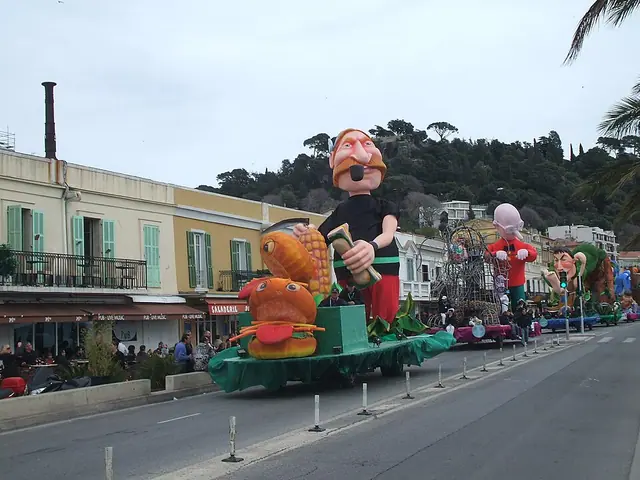
Photo: Honeydew, CC BY-SA 3.0 Nice Carnival
Usually the second half of February, sometimes into early March · Nice
Two weeks of parades of giant papier-mâché figures, by day and lit up at night, and flower parades where people on the floats throw mimosa to the crowd. Menton's Lemon Festival, along the coast, runs at the same time.
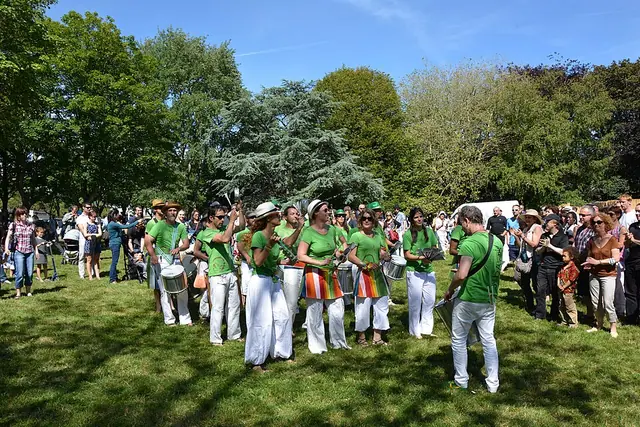
Photo: G.Mannaerts, CC BY-SA 4.0 Fête de la Musique
21 June · Across France
Free music on street corners, in squares, bars and courtyards, from amateurs and professionals alike, on an evening close to the longest day of the year.
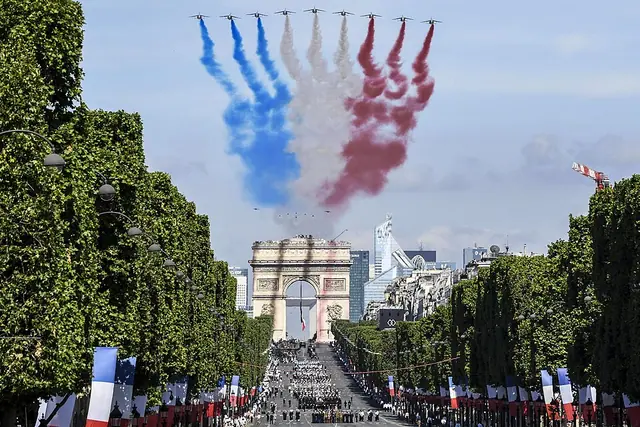
Photo: Chief Petty Officer Michael McNabb, Public domain Bastille Day (14 juillet)
14 July · Across France, above all Paris
The national holiday: a military parade down the Champs-Élysées in the morning and fireworks at the Eiffel Tower at night. Many fire stations hold public dances (bals des pompiers) on the evenings of 13 and 14 July.
Festival d'Avignon
Usually three weeks in July · Avignon, Provence
One of the world's biggest theatre festivals: the official programme plays in the Palais des Papes' courtyard and other venues, and the fringe (the Off) puts on more than a thousand shows. Rooms sell out early.
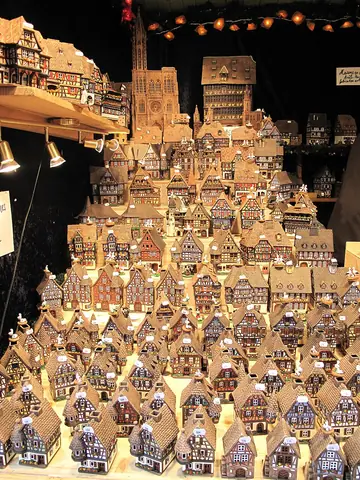
Photo: Tangopaso, Public domain Christmas markets
Usually late November to 24 December · Strasbourg, Colmar and across Alsace
Wooden stalls selling mulled wine (vin chaud), spiced biscuits and decorations. Strasbourg's market dates back to 1570 and is one of the oldest in Europe; the city and its trains are very busy at weekends.
Fête des Lumières
Usually four nights around 8 December · Lyon
Light shows projected on churches and buildings across the city, from an old tradition of setting candles in windows on 8 December. Free, and very crowded.


How regions differ
Brittany and Normandy
Best: Jun–Jul, Sep
Green, mild and changeable, with rain in every season and summers that are rarely hot. June to September suits the coast, the D-Day beaches and Mont-Saint-Michel, which is at its most crowded in July and August.
Provence and the Riviera
Best: May–Jun, Sep–Oct
Hot, dry summers and mild, sunny winters. The lavender flowers from about late June to late July, while the coast from Saint-Tropez to Menton is crowded and at its dearest. Spring and autumn are better for walking, cycling and the hill villages, though the mistral can blow cold.
The Alps
Best: Jul–Sep · Avoid: Nov
Skiing from about mid-December to April in resorts such as Chamonix, Courchevel and Val d'Isère; walking, climbing and swimming in Lake Annecy from late June to September, when the summer lifts run. In November, before the snow, many resort hotels, lifts and restaurants are shut.
Corsica
Best: May–Jun, Sep
A mountainous island, by ferry from Marseille, Toulon or Nice, or by air. The beaches are at their best from June to September, the usual season too for the GR20, one of Europe's toughest long-distance paths. From November to March many hotels and restaurants outside Ajaccio and Bastia close.
Culture and customs
Greetings
Say "bonjour" ("bonsoir" in the evening) when you walk into a shop, café or waiting room, and "au revoir" as you leave: going straight to your question without it comes across as rude. Friends and family greet each other with kisses on the cheeks (la bise), usually two, more in some regions; with someone you've only just met, a handshake is safer.
Tipping
Not expected: by law, prices include service (service compris). Locals round up or leave a euro or two in a café, and perhaps 5 to 10% for an excellent meal. Taxi fares are usually just rounded up.
What to wear
Neat casual in the cities, where people dress a little more smartly than in Britain: sportswear and shorts stand out in Paris restaurants. Cover your shoulders in churches and cathedrals. Many public swimming pools allow only close-fitting swimming trunks, not loose shorts, and some ask for a swimming cap.
Etiquette
- Restaurants keep fixed hours: lunch from about noon to 2 pm and dinner from about 7.30 pm. Outside the cities, a kitchen that closes after lunch won't serve again until the evening.
- The bill only comes when you ask for it (l'addition, s'il vous plaît). Lingering over a meal or a coffee is normal, and nobody will hurry you.
- Tap water is free with a meal: ask for a carafe (une carafe d'eau) if you don't want bottled water.
- Many shops close on Sundays, and in small towns at lunchtime too. Most museums close one day a week: the Louvre on Tuesdays, the Musée d'Orsay on Mondays.
- Pickpockets work the Paris metro and the busiest sights, such as the Eiffel Tower, the Louvre and Montmartre: keep bags closed and phones out of back pockets.
What to eat
- Bread and pastries
- A fresh baguette from the boulangerie, bought every day, and a croissant or pain au chocolat for breakfast. Most bakeries open early, and many on Sunday mornings.
- Cheese
- Hundreds of kinds, from Camembert and Roquefort to Comté, served after the main course and before dessert.
- Boeuf bourguignon and coq au vin
- Burgundy's slow braises: beef, or chicken, cooked for hours in red wine with mushrooms, onions and bacon.
- Bouillabaisse
- Marseille's stew of several Mediterranean fish, served in two parts: the broth first, with toasted bread and rouille (a garlic and saffron mayonnaise), then the fish. Some restaurants want it ordered a day ahead.
- Crêpes and galettes
- From Brittany: sweet crêpes of wheat flour, and savoury galettes of buckwheat, often with ham, egg and cheese (a complète), with a bowl of cider.
- Tartiflette, raclette and fondue
- The Alps' cheese dishes: potatoes baked with Reblochon, bacon and onion; melted cheese scraped over potatoes; or bread dipped in a pot of melted cheese.
A few words of French
Always start with "bonjour". English is common in hotels and the tourist areas of Paris, less so in the countryside.
| Phrase | Say it | Meaning |
|---|---|---|
| Bonjour | bohn-ZHOOR | Hello; good day |
| S'il vous plaît | seel voo PLEH | Please |
| Merci | mair-SEE | Thank you |
| Excusez-moi | ex-kew-zay-MWAH | Excuse me; sorry |
| Parlez-vous anglais? | par-lay voo ahn-GLEH | Do you speak English? |
| C'est combien? | say kohm-BYAN | How much is it? |
| L'addition, s'il vous plaît | lah-dee-SYOHN seel voo PLEH | The bill, please |
| Au revoir | oh ruh-VWAHR | Goodbye |
Landmarks in France
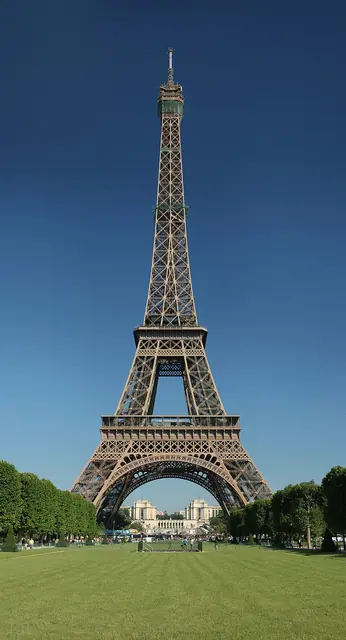
Photo: Benh LIEU SONG, Public domain building
Eiffel Tower
Add a photo taken within 400 m of it, with its location saved, and your map suggests this landmark for it.
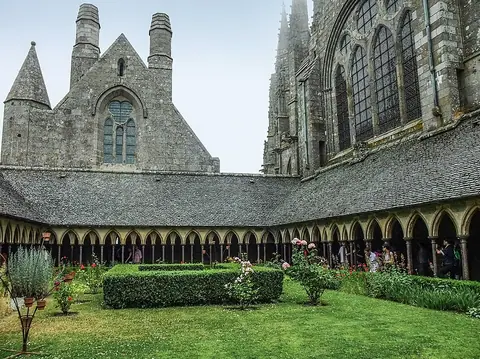
Photo: Nikater, Public domain site
Mont-Saint-Michel
Add a photo taken within 6 km of it, with its location saved, and your map suggests this landmark for it.
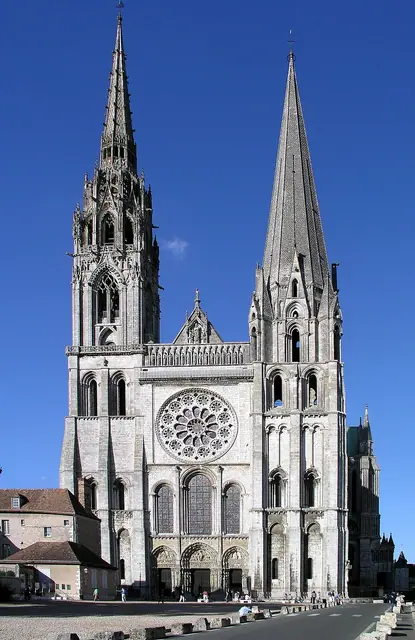
Photo: BT, Public domain building
Chartres Cathedral
Add a photo taken within 300 m of it, with its location saved, and your map suggests this landmark for it.
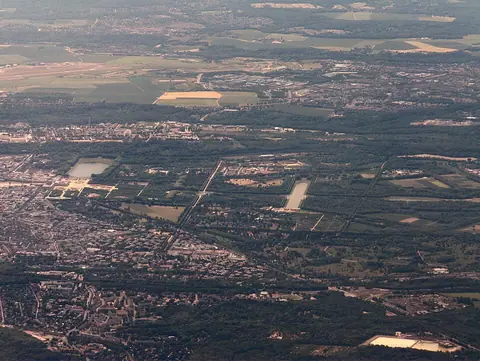
Photo: David.Monniaux, CC BY-SA 3.0 site
Palace of Versailles
Add a photo taken within 2.5 km of it, with its location saved, and your map suggests this landmark for it.
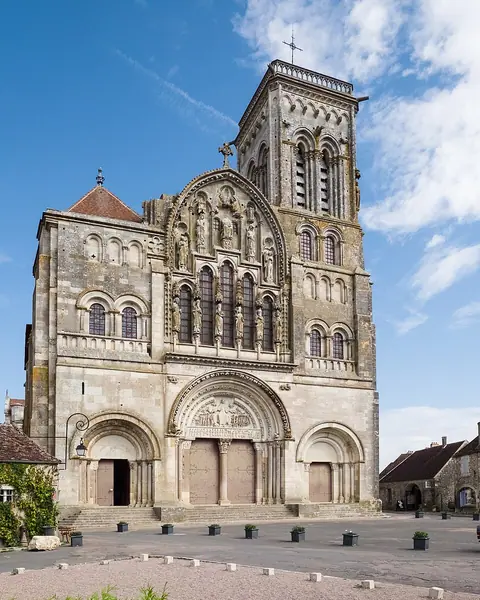
Photo: DKrieger, CC BY-SA 3.0 site
Vézelay
Add a photo taken within 2 km of it, with its location saved, and your map suggests this landmark for it.
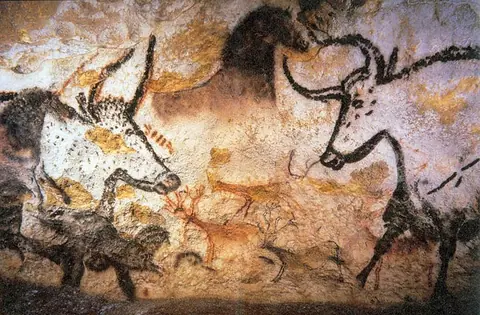
Photo: EU, Public domain natural
Decorated Caves of the Vézère Valley
Add a photo taken within 15 km of it, with its location saved, and your map suggests this landmark for it.
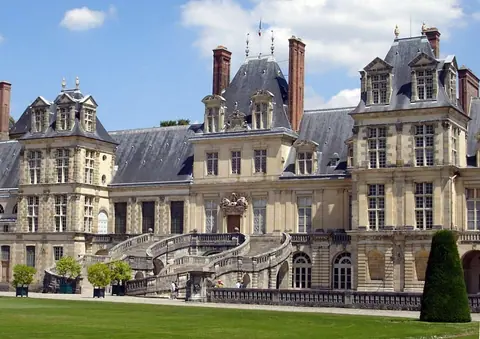
Photo: user:Carolus, CC BY 2.5 building
Palace of Fontainebleau
Add a photo taken within 1 km of it, with its location saved, and your map suggests this landmark for it.
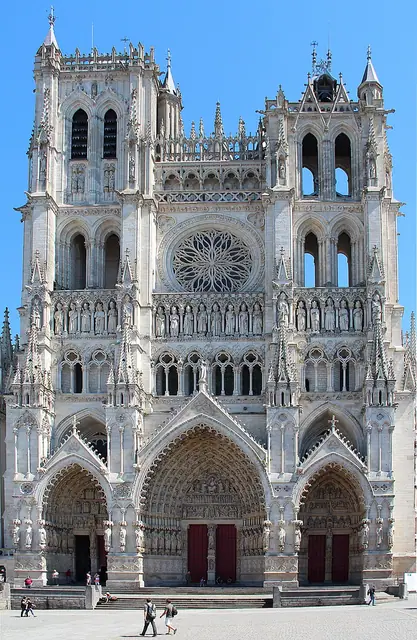
Photo: Jean-Pol GRANDMONT, CC BY 3.0 building
Amiens Cathedral
Add a photo taken within 300 m of it, with its location saved, and your map suggests this landmark for it.
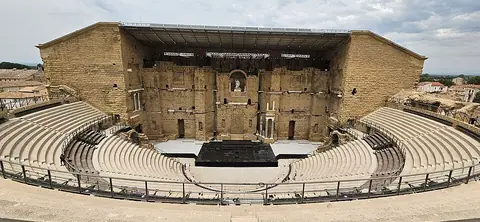
Photo: Jigaraphale, CC BY-SA 4.0 site
Roman Theatre of Orange
Add a photo taken within 1.3 km of it, with its location saved, and your map suggests this landmark for it.


Practical facts
- Currency
- Euro (€)
- Languages
- French. Regional languages such as Breton, Basque, Occitan, Alsatian and Corsican are still spoken, but have no official status.
- Plugs and voltage
- Types C and E (two round pins), 230 V
- Driving
- On the right
- Time
- Central European Time: UTC+1, and UTC+2 (Central European Summer Time) from late March to late October
- Emergency number
- 112 for police, fire and ambulance; or 15 for medical help (SAMU), 17 for police and 18 for the fire brigade
- Calling code
- +33
From France on Wikidata (free to reuse, CC0), queried on 16 November 2026. Rules and numbers change: check before you travel.
Plan your trip
Places to stay, tours, flights and travel insurance for France, from our travel partners: open the Travel Desk when you’re ready to book.
Partner offers. We may earn a commission if you book, at no cost to you.
Start your map
Colour in France and every other country you've been to, add your photos and plan the next trip. Your map is private and free to start.