My Planet View · Country guide
Croatia
Walled towns on the Adriatic, island ferries, and the lakes and waterfalls of Plitvice.
- Best months
- May–Jun, Sep
- Last checked
- 16 November 2026

Overview
Croatia's mainland coast runs for nearly 1,800 km down the Adriatic, past more than a thousand islands and islets. Its towns grew up under Rome and Venice: Pula has a Roman amphitheatre, Split's old town is built inside the Emperor Diocletian's palace, and Dubrovnik is ringed by walls you can walk along. Inland are the capital, Zagreb, and the Plitvice Lakes, a chain of turquoise lakes joined by waterfalls.
Ferries and catamarans link the coast to the islands, and car ferries fill up in summer, so book or arrive early. Croatia took up the euro and joined the Schengen area in 2023. July and August bring heat, crowds and high prices to the coast, so June and September are the easier months for most visitors.

When to go
The mainland coast and inland, taken together. The islands' season is shorter, and they have a strip of their own below.
- January: Good
- February: Good
- March: Good
- April: Good
- May: Best
- June: Best
- July: Good
- August: Good
- September: Best
- October: Good
- November: Good
- December: Good
- Best
- The most pleasant weather for sightseeing and being outdoors.
- Good
- Fine for a visit, with a catch (heat, rain, cold or crowds) named below.
- Avoid
- Most visitors would find it hard going: extreme heat, storms or much of it closed.
Season by season
Spring (March to May)
Mild and green, with the Plitvice waterfalls at their fullest after the winter's rain and snow. Island hotels and restaurants open around Easter or in May, and the sea is cool until late May.
Summer (June to August)
Hot and sunny on the coast, around 30°C, with the sea warm enough for long swims. July and August are the busiest and most expensive months, when ferries, roads and old towns are crowded. Zagreb is hot too, with thunderstorms.
Autumn (September to November)
September keeps summer's warmth and a warm sea without the crowds. In October the island season winds down and the rains begin; November is wet and windy.
Winter (December to February)
Mild on the coast, around 10–13°C by day in Split and Dubrovnik, but wet, and the bura wind can stop ferries and close bridges. Inland is cold, often below freezing, with snow in the mountains and at Plitvice, and Zagreb's Advent market from late November.
The weather
Mediterranean on the coast and islands, with hot, dry summers and mild, wet winters; continental inland, where Zagreb has cold winters and warm summers. Between them, the mountains of Lika and Gorski Kotar get heavy snow. Two winds shape the coast's weather: the bura, a cold, gusty north-easterly that brings clear skies, mostly in winter, and the jugo, a warm, damp south-easterly that brings rain and rough seas.
Festivals and holidays
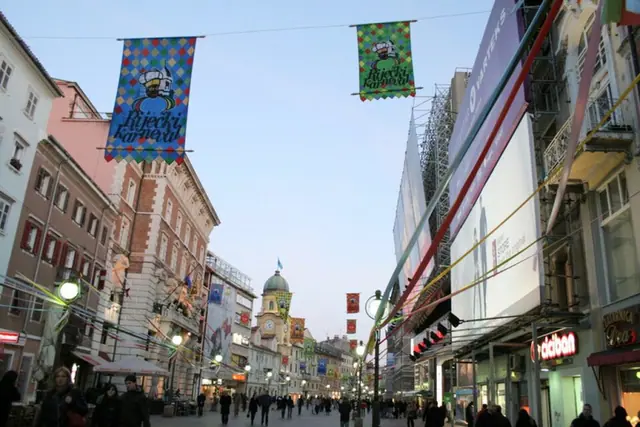
Photo: Roberta F., CC BY-SA 3.0 Rijeka Carnival
Usually from January to Shrove Tuesday, in February or early March, with the main parade on the Sunday before · Rijeka
Weeks of masked balls and parades, ending with an international parade through the city. Bell-ringers (zvončari) in sheepskins come in from the villages around to chase winter away.
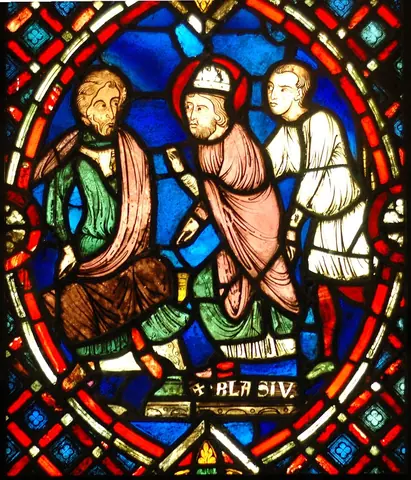
Photo: Unknown artist Unknown artist, Public domain Feast of St Blaise
3 February · Dubrovnik
The day of the city's patron saint: processions carry his relics through the old town, with flags, music and people from the villages around in folk costume.
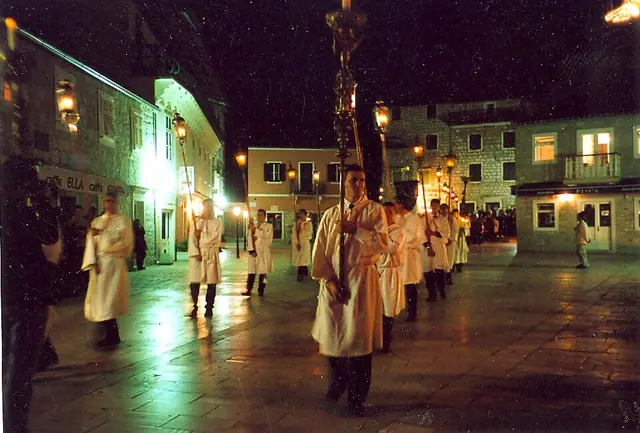
Photo: E.mil.mil, CC BY-SA 3.0 Za Križen (Following the Cross)
The night before Good Friday, in March or April · Hvar
Six processions set out at the same time from six villages in the middle of the island and walk through the night, each visiting the others' churches, each led by a man carrying a heavy cross.
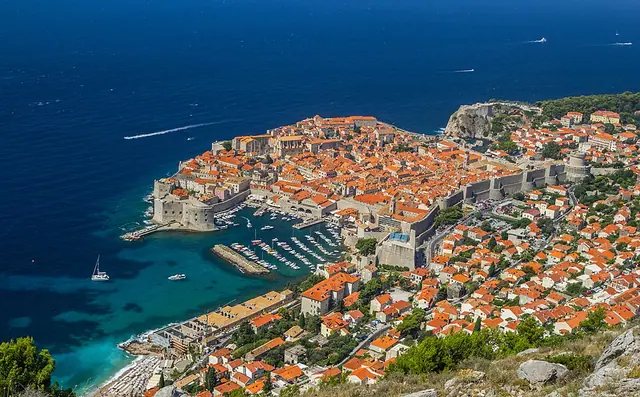
Photo: Zysko serhii, CC BY-SA 4.0 Dubrovnik Summer Festival
10 July to 25 August · Dubrovnik
Theatre, classical music and dance on open-air stages in the old town's squares, forts and palaces, held every summer since 1950.
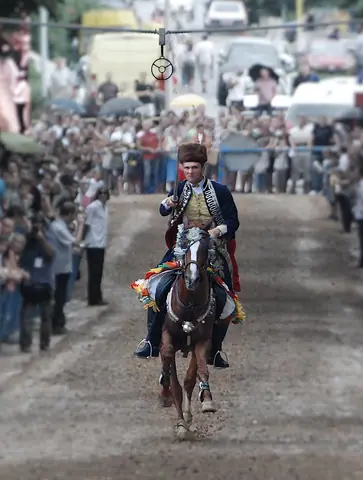
Photo: User:PJL, CC BY-SA 2.5 Sinjska alka
Usually the first Sunday of August, after two days of trials · Sinj, near Split
Horsemen in 18th-century costume gallop down a course and aim a lance at a small iron ring, marking a victory over the Ottomans in 1715.
Advent in Zagreb
Usually late November to early January · Zagreb
Christmas markets, lights and stalls of mulled wine and sausages across the centre, from Ban Jelačić Square and Zrinjevac park up to the old upper town.


How regions differ
Istria, Split, Dubrovnik and the coast
Rovinj, Pula, Zadar, Split and Dubrovnik are towns lived in all year. Summer is hot, and July and August are crowded, above all in Dubrovnik's old town when cruise ships are in port. Winters are mild but wet and windy, and some restaurants and hotels close until spring.
The islands
Best: May–Jun, Sep · Avoid: Nov–Mar
Hvar, Brač, Korčula, Vis, Mljet and the Kvarner islands (Krk, Cres, Lošinj) have a season from about May to October. From November to about April most hotels and restaurants close, ferries and catamarans run on winter timetables, and the bura can stop them altogether.
Zagreb and the inland parks
Zagreb has cold winters, often below freezing, and warm summers, and its Advent market fills the centre from late November to early January. The Plitvice Lakes are open all year: fullest of water in spring, busiest in July and August, and often snowy in winter, when fewer routes are open.
Culture and customs
Greetings
A handshake and eye contact when you meet; friends often kiss on both cheeks. Say "dobar dan" (good day) when you walk into a small shop or café. "Bok" is a casual hello and goodbye between friends.
Tipping
Not expected, though welcome. Round up in cafés and taxis, and leave about 10% in a restaurant for good service, in cash. Service is rarely added to the bill.
What to wear
Casual, with smarter clothes for evenings in the old towns. Cover your shoulders and knees in churches and monasteries, and keep swimwear for the beach. Many beaches are pebble or rock, and sea urchins are common, so water shoes help.
Etiquette
- Walking round the old towns in swimwear or without a shirt is banned in several places, Split, Hvar and Dubrovnik among them. Cover up away from the beach.
- Coffee is a slow social ritual: one cup can last an hour, and no one will hurry you from a café table.
- Since 2023 most shops, supermarkets included, may open on only 16 Sundays a year, so shop on Saturday. Shops at petrol stations, ports and stations are exempt.
- Swimming isn't allowed in the Plitvice Lakes, nor any longer at Krka's waterfalls.
- The war of independence in the 1990s (the Homeland War) is within living memory. Let people raise it themselves, and call the language Croatian.
- Naturism has a long history here, at marked naturist (FKK) beaches and campsites; elsewhere, swimwear stays on.
What to eat
- Peka
- Lamb, veal or octopus baked slowly with potatoes under an iron bell covered in embers. Many restaurants need a few hours' notice, so order it ahead.
- Black risotto (crni rižot)
- Risotto coloured and flavoured with cuttlefish ink, on almost every menu in Dalmatia.
- Grilled fish with blitva
- Fresh fish grilled over wood and often priced by the kilo, served with blitva: Swiss chard and potatoes with olive oil and garlic.
- Pašticada
- Beef marinated, then braised for hours in wine with prunes and spices, and served with gnocchi. A Dalmatian dish for feast days.
- Istrian truffles and pasta
- Istria's forests give black and white truffles, shaved over fuži or pljukanci, the local hand-made pasta. White truffles are an autumn treat.
- Štrukli
- From Zagreb and the Zagorje hills: thin dough filled with fresh cheese, boiled or baked with cream.
A few words of Croatian
English is widely spoken on the coast and in Zagreb, and German and Italian are common too. Č and ć sound like "ch", š like "sh", ž like the "s" in "pleasure", and j like "y".
| Phrase | Say it | Meaning |
|---|---|---|
| Bok | bohk | Hi; bye (casual) |
| Dobar dan | DOH-bar dahn | Good day; hello |
| Molim | MOH-leem | Please; you're welcome |
| Hvala | HVAH-lah | Thank you |
| Da / Ne | dah / neh | Yes / No |
| Oprostite | oh-PROH-stee-teh | Excuse me; sorry |
| Koliko košta? | KOH-lee-koh KOHSH-tah | How much is it? |
| Račun, molim | RAH-choon MOH-leem | The bill, please |
Landmarks in Croatia
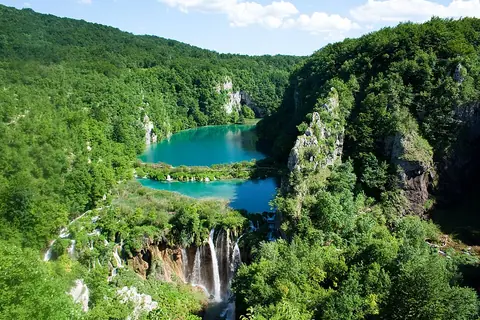
Photo: Pablo BM from London, England, CC BY 2.0 park
Plitvice Lakes National Park
Add a photo taken within 10 km of it, with its location saved, and your map suggests this landmark for it.
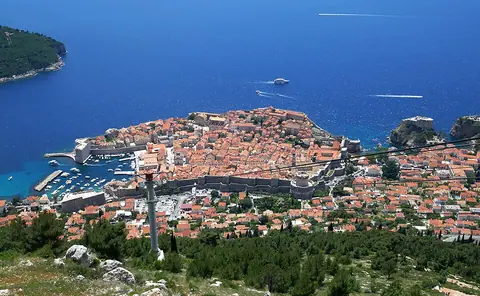
Photo: Tiia Monto, CC BY 4.0 old town
Old City of Dubrovnik
Add a photo taken within 2 km of it, with its location saved, and your map suggests this landmark for it.
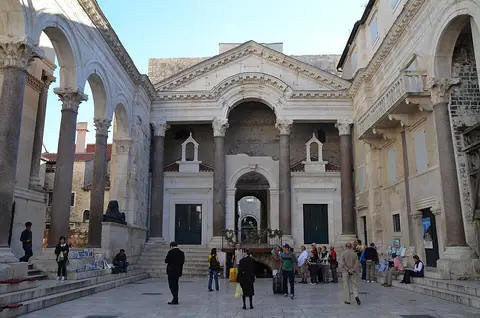
Photo: Following Hadrian, CC BY-SA 2.0 old town
Diocletian's Palace, Split
Add a photo taken within 1 km of it, with its location saved, and your map suggests this landmark for it.
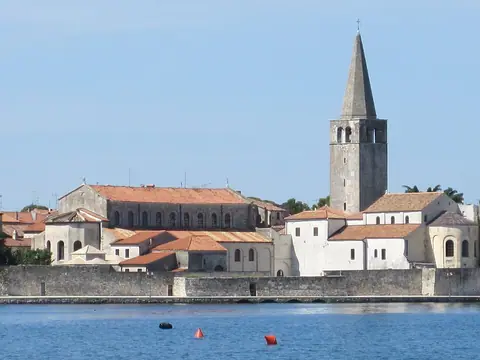
Photo: Tiefkuehlfan, CC BY-SA 4.0 old town
Euphrasian Basilica, Poreč
Add a photo taken within 1 km of it, with its location saved, and your map suggests this landmark for it.
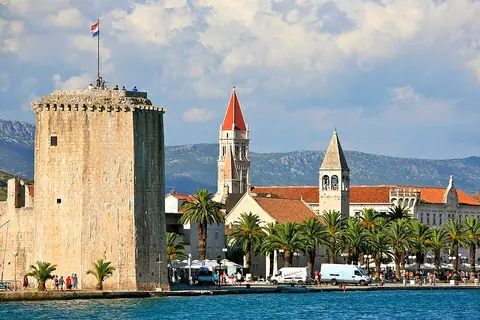
Photo: Alex Proimos from Sydney, Australia, CC BY 2.0 park
Historic City of Trogir
Add a photo taken within 20 km of it, with its location saved, and your map suggests this landmark for it.
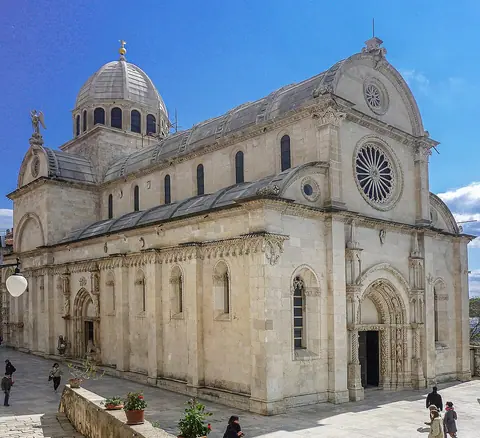
Photo: SchiDD, CC BY-SA 4.0 building
Šibenik Cathedral
Add a photo taken within 300 m of it, with its location saved, and your map suggests this landmark for it.
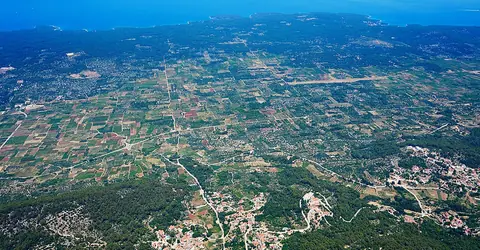
Photo: Carsten Steger, CC BY-SA 4.0 site
Stari Grad Plain
Add a photo taken within 2.5 km of it, with its location saved, and your map suggests this landmark for it.


Practical facts
- Currency
- Euro (€), since 1 January 2023, when it replaced the kuna
- Languages
- Croatian. Italian is also official in parts of Istria, where signs are in both languages, and English is widely spoken on the coast.
- Plugs and voltage
- Types C and F (two round pins), 230 V
- Driving
- On the right
- Time
- Central European Time: UTC+1, and UTC+2 from late March to late October
- Emergency number
- 112 for police, fire and ambulance. The national numbers work too: 192 for police, 193 for fire and 194 for an ambulance.
- Calling code
- +385
From Croatia on Wikidata (free to reuse, CC0), queried on 16 November 2026. Rules and numbers change: check before you travel.
Plan your trip
Places to stay, tours, flights and travel insurance for Croatia, from our travel partners: open the Travel Desk when you’re ready to book.
Partner offers. We may earn a commission if you book, at no cost to you.
Start your map
Colour in Croatia and every other country you've been to, add your photos and plan the next trip. Your map is private and free to start.